Monday, May 16, 2011

Sick Puppies Test Positive for Giardia


Meet two darling dachshund puppies, Pinball and Rambo, owned by Susan and Daniel Donaldson.  These brother and sister puppies were purchased from a breeder and checked out well at their first exam.  Within days, Rambo became very lethargic and had diarrhea, and Pinball got significant diarrhea but wasn't as depressed.  They came in to Care Animal Hospital and were seen by Dr. Tracie Grubb.  She did two different tests on the feces and the samples tested positive for giardia. 

So - what exactly is Giardia?     Giardia is sometimes confused with "worms" because they invade the gastrointestinal tract and can cause diarrhea.  Giardia is a one-celled parasitic species classified as a protozoa.

How do dogs get Giardia?     A dog becomes infected with Giardia when it swallows the cyst stage of the parasite.  Once inside the dog's intestine, the cyst goes through several stages of maturation.  Eventually, the dog passes infective cysts in the stool.  These cysts lie in the environment and can infect other dogs.  Giardia may also be transmitted through drinking infected water.  Most streams and lakes in Colorado are infected with Giardia. 

How did we diagnose Giardia in these puppies?     At Care Animal Hospital we perform two different tests on fresh stool to try and identify giardial cysts.  One is called a fecal centrifugation test, where the feces are spun in a specially designed centrifuge machine using a specific kind of liquid to help separate the cysts.  The coverslip sitting on the centrifuge tube is placed on a slide and the sample scanned under the microscope looking for cysts.

Recently we obtained another type of test known as an ELISA test - which looks for some of the markers on the outside of the giardial cysts and reacts with a color change.

Both tests miss about 15% of the positive dogs, but they miss a different 15% so using both tests together helps us to be over 90% sure that the dog is infected if we get a positive ELISA test or we identify the cysts under the microscope

How is giardiasis treated?     The typical drug used to kill Giardia is metronidazole (flagyl), an antibiotic that is either a tablet or we can create a liquid for smaller animals.  It is normally given for 8 days (two times a day) to treat giardiasis.  Other drugs are also used if diarrhea and dehydration occur.  If Metronidazole is not effective, other medications may be recommended. 

Can humans become infected with Giardia?     Giardia can cause diarrhea in humans.  If your dog is diagnosed with giardiasis, environmental disinfection is important.  We recommend thoroughly cleaning the pet's living and sleeping areas and then allowing the areas to dry out for several days before reintroducing pets.  One cup of bleach in 1 gallon of water is effective in killing the cysts. 

Are dogs with giardial cysts always sick?     Most dogs that are infected with Giardia do not have diarrhea or any other signs of illness.  When the dysts are found in the stool of a dog without diarrhea, many times we consider them transient and sometimes do not treat these dogs.  However, as Rambo and Pinball taught us, in puppies and debilitated adult dogs, Giardia may cause severe, watery diarrhea that may be fatal. 

We are happy to report that Rambo and Pinball are currently doing very well.

Thursday, April 28, 2011

Degenerative disk disease in a little dog (Or…Adventures in immobilizing a terrier for the good of her health)

Isabella has been with us over nine years and will be turning ten in October. She has been a happy, healthy little dog and a great addition to our family.

In mid-March, 2011, our kids noticed that Isi wasn’t herself: “Mom, something’s wrong with Isi. She won’t even look at the ball when we throw it to her. Something’s definitely wrong.” Isi, being female and a terrier, can certainly have her moods. I didn’t think much of her disinterest in play until the following day when she wasn’t interested in much of anything. She was clearly uncomfortable and was having a hard time lying down and getting up the stairs. She hadn’t eaten in two days and hadn’t gone number two for at least a day. When I put my hand under her belly (which had become tense) to move her aside, she yelped. Of course she had waited until Sunday evening to show us these troubling signs and we decided to make a trip to urgent care.

Once at urgent care, Isi had a fairly loose bowel movement in the middle of the floor – completely unlike her. We suggested that her anal sacs might be full and they certainly were. Isi appeared to feel better after having them expressed so we left with antibiotics and pain medication and hoped we were on our way to recovery.

The following morning, however, Isi wasn’t getting back to normal the way we expected. Over the course of the day we realized something was still going on. On late Monday afternoon, we called Care Animal Hospital, our regular vet clinic, and were told to bring her in immediately to see Dr. Garnett. After checking Isi over and reviewing her case, Dr. Garnett was not convinced that this was a stomach or anal sac issue; she began to explore the possibility of a disc problem. Isi would need to be immobilized immediately and Dr. Garnett decided to keep her overnight in anticipation of x-rays the following morning. We knew it would be best for all of us, especially Isi, so we said goodbye and waited anxiously for news.

The next day, Dr. Garnett called and said her suspicions had been confirmed; that the x-rays showed evidence of degenerative disc disease. The radiologist would later confirm Dr. Garnett’s diagnosis so we prepared to immobilize Isi for at least the next two weeks so that she could heal and hopefully return to normal. We also prepared for the worst case scenario – full paralysis.

So how would we immobilize our otherwise energetic little terrier with two kids in the house? The emotional logistics would actually prove to be the most difficult. Fortunately, we had done most of the work when Isi was a puppy – we had made the decision to crate train Isi many years ago. While Isi typically has the run of the house, she does love her crate. She sleeps, travels, and seeks respite (when the kids get to be too much) in her crate. Over the next two weeks, we would come to find out that it was probably harder for us than for Isi to be in her crate that long. Diligently, several times a day we carried the crate outside, put her on a leash for short bathroom breaks, and carried her back inside in the crate. We brought her food to her door where she could eat - from her crate. She watched tv in the family room with us – from the crate. We missed her warm little body at our feet and her pretentious prances across the floor but slowly and surely, she improved.

We decided to continue to restrict movement for the next two weeks – letting her out only to eat or relieve herself and have a good stretch. We saw Dr. Garnett nearly one month after Isi’s initial signs and everything checked out ok!  Isi is restricted from jumping on the couch or the bed (easy, because we never allowed that anyway) but otherwise is looking like her old self. The kids couldn’t be happier that she wants to play ball again and I’m happy to have her sit at my feet. It wasn’t easy (mostly for us) but we’re glad Isi spent most of that month in her crate.

My family has been coming to Care Animal since 1989, when we had Quincy, a sweet little Yorkshire Terrier. We have had confidence in Dr. Garnett and her staff since that time and are happy to share a partnership with them in the health of our pets. Thank you! 

-- Darcie B.

Saturday, April 16, 2011

Sammy's Story - An adoption that was "meant to be"


I adopted Sammy from the Petsmart at 52nd and Wadsworth in Arvada. My husband and I always go to see the kitties that are there and tempt ourselves and one day in June 2010 I saw this beautiful tortoise cat just sitting in the cage looking quietly out at us and I was hooked. I resisted since we had an adopted kitty already and an elderly Pekinese. A couple weeks later when we went back she was gone and I thought, "Well, that's for the best she has a home now" but I never forgot her.

Fast forward a few months to late October and I was suffering with the loss of our Peke in September and looking for a kitty that would grab me as much as Sammy had and when I went in the cat room there she was! She had been pulled for treatment for an injury and had been placed back at Petsmart for adoption. That was Saturday, by Sunday I announced that we needed the cat carrier as we were going to go get that beautiful girl and bring her home.

Sammy (short for Samhain as "Weenie" short for Halloween was just too silly) was matted from staying so long in a cage and was dirty and her one eye was still a bit cloudy but I was in love. We started the paperwork, put her in the carrier and paid with out new baby howling her protest.

We got her home and settled then went right back to get her a cat perch for the window, (which she has decided is the best invention for catdom, as are all windows,) I soon learned that their guess on her age was wrong. They said 4-6 years but she was acting more like she was one. She LOVES to play and run and eat and hunt birds and squirrels from her perches and she is one active girl. She is very good though and doesn't try and play too rough with out 8 year old adopted kitty, Youki. She is so loving and talkative and her coat took some major brushing from her time at the shelter but with good food and tons of rubs her coat is so glossy and beautiful!


She is just a wonderful kitty! She watches Youki all the time and emulates her. So Youki grooms herself and Sammy has to as well. Youki curls up and sleeps and Sammy looks at her like she's crazy and runs off to play. Youki yowls after using the litter box so Sammy does now too. "Time to flush!!!" she says. I will always adopt older kitties as they are stable and settled in who they are but with the possibility of meshing with their new environment.

I love our girls so much and my husband and I always check the kitty cages in Petsmart but tell ourselves that we need to let our girls have their spaces and to add another would be mean. But one day someone else will be coming home with us!


Sunday, April 10, 2011

Friendly feral cat gets second chance


Newman is a feral cat who was adopted from Care Animal Hospital 3 years ago. When he was first brought into the hospital, Dr. Garnett was sure that, like most feral cats, he could not be touched without a sedative. Newman was a little bit different than we expected, though. He sat near the front of the cage after his neuter surgery and seemed to want to interact, so Dr. Garnett started to look for a good home for him.

His owner-to-be was in the pottery lab with Dr. Garnett one day complaining about too many mice in her house, and how she really needed a good "mouser". Dr. Garnett told her that she had this very beat-up cat that had vomited a lot of tapeworms, indicating that he was probably great at catching mice. She took this battered old guy, who lived under her bed for a few weeks, but really ended up being a joy to their family. Here is a statement that Newman wrote for the blog:

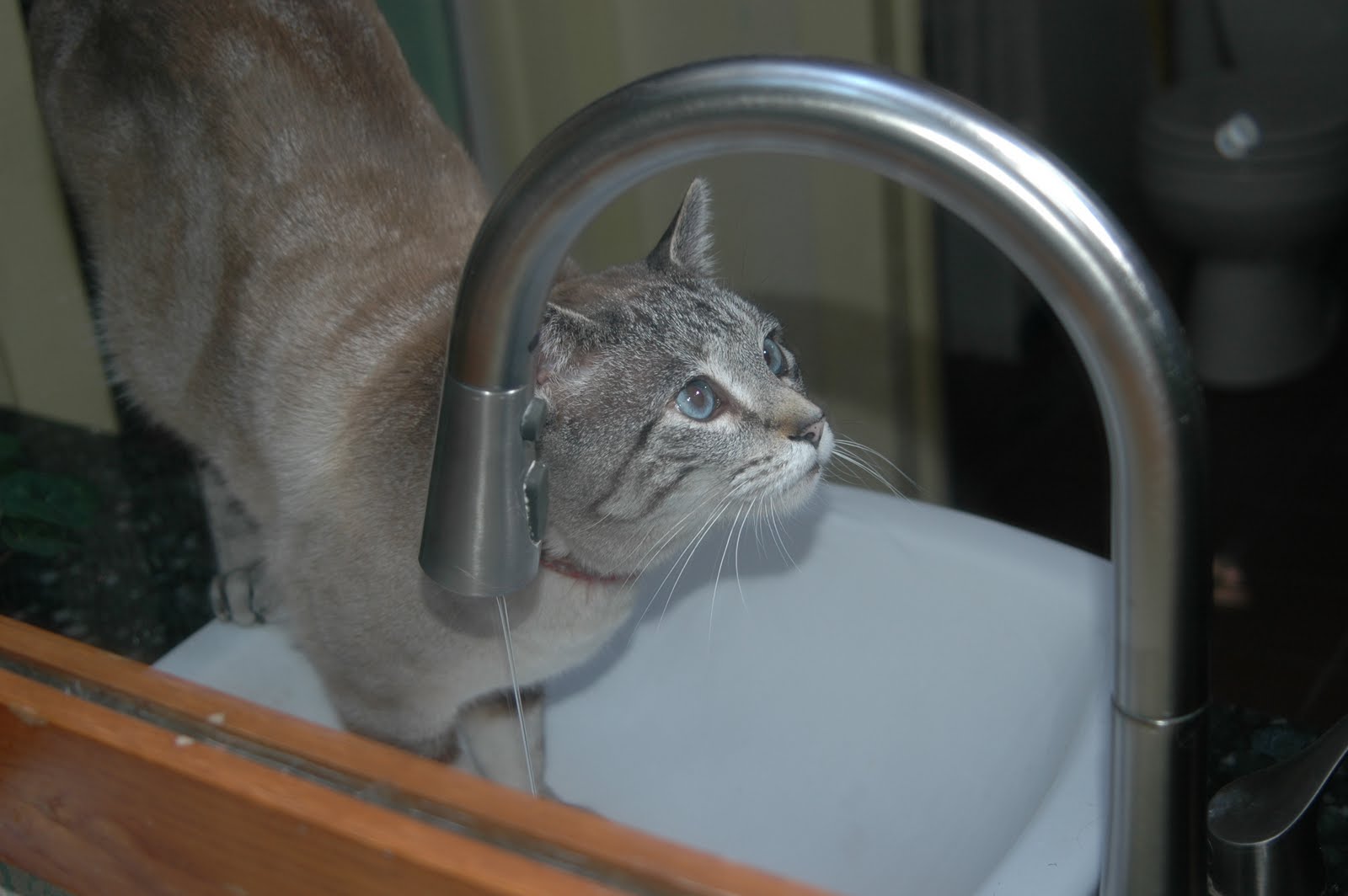
My name is Newman (after Paul, not Seinfeld: let's be clear about that up front). When I'm not having a drink of fresh water from the faucet, I'm fixing my Siamese blue eyes on an impudent dog, letting her know who's boss around here. Since coming to live with my adoptive mom three years ago (after Dr. Paige tended my extensive wounds and took away my manhood--and, soon after, my tomcat cheeks), I've come to be loved by all the neighborhood as "the best kitty", presumably due to my incredible good looks, affectionate nature, keen mousing abilities but respect for the family parrot, and the fact that all the other cats in the surrounding environs welcome me with open paws. Or maybe it's because my person can't stop singing my praises about what a perfect match we are. "I couldn't have special ordered a better cat," she's been known to insist. "He's everything I wanted, and nothing I didn't. I don't even have to bother with a litter box because, even in the worst weather, Newman will only go outside." I mean, what more could a person want from a pet? I'm not even a finicky eater.

Thursday, March 31, 2011

All About Abby's Allergic Ears


Meet Abby, a lovely 4 year old spayed female golden lab owned by Kurt S. Dr. Garnett met Abby in 2008 when Kurt brought her in for an exam of her ears. He reported that she had been having chronic ear infections for quite a while. She had been treated by other veterinarians with many ear products but just did not seem to be getting better.

Dr. Garnett did a thorough physical exam from head to tail, and then focused on the ears. They were swollen with reddened tissues and a huge amount of dark debris down the canals. They were very painful to Abby and she cried when they were cleaned.

Dr. Garnett’s goal at that time was to get an ear smear and run cytology to try and determine whether she had a primary yeast or bacteria problem, or a mixture of both. On the smear, it was interesting that the yeast seen were in fairly mild numbers, unlike what was expected with that amount of debris. What that often means is that this dog has an underlying problem that is the true reason for the ear infection. In Abby’s case, Dr. Garnett suspected she had a food allergy since it was winter and not many outdoor allergies were prevalent in the winter.

Allergies in dogs are usually expressed as skin problems (the skin is the allergic organ in the dog – not the eyes and nose like in people.) Other underlying problems that can often lead to chronic ear infections include low thyroid disease, inhalant allergies (allergic to something in her environment), an inherited problem with the ears (often seen in cockers), and a few other rarer problems that can lead to ear infections that cannot be resolved. The most common cause of chronic ear infections in Colorado in the winter, though is food allergy.

It was decided that Abby would be started on a cleaning and medicating treatment regimen, but that Kurt would put her on a food trial of Duck and Pea, a prescription food product designed to help animals with food allergies. It was assumed that Abby had never eaten duck before, so she should not be allergic to this product. Dogs and cats, when suffering from food allergies, are usually allergic to the protein portion of their food.

This protocol was followed, but later the debris came back. A thorough ear flush was performed under anesthesia and pictures were taken while the ears were being cleaned. Note below a picture of one of the ears prior to cleaning. Following the deep ear flush, Abby was put back on the duck food as well as routine cleaning s followed by medications.


Since 2008, Abby has had a few “flare ups” of her ears, with various foods incriminated to explain the infections. Recently, she sat on one of our chairs in the hospital to proclaim that her ears were feeling better. Dogs with food allergies must be careful to only eat the appropriate diet prescribed. They cannot eat rawhide chews or scraps from the table, and treats must have the same protein source as the diet that has been prescribed. Since most foods from the store contain many, many proteins (including meat byproducts, which can represent a wide variety of proteins), owners cannot purchase over the counter foods for food trials. Once a diet is found that works, it is generally adopted for the rest of the pet’s life so the skin can stay healthy and ear problems can be avoided.

Luckily, Kurt is very committed to the well-being of Abby and keeps vigilant watch on her ears, as does Kurt’s mom, Jan, a longtime client of Care Animal Hospital and a wonderful “grandmother” to her “granddog.”

Tuesday, March 15, 2011

Infected toenail or cancer?


Meet Sierra, an 8 year old spayed female flat coated retriever.  Sierra came in to see Dr. Garnett on 1-30-11 for a swollen toe with a nail that was at a "funny angle."  Dr. Garnett was concerned about the toe; in addition to infection, dogs can have tumors of the toe nails that start where the nail joins the paw.  These tumors can be cancerous and can progress very quickly.  Here is a picture of how the toe looked after the nail was removed – pretty angry and infected.


Dr. Garnett’s next step was to take an x-ray of the toe to see what the bone and soft tissues underneath the nail looked like.  Notice the missing nail as well as the lack of bony tissue (needle pointing to the toe in question).  The x-ray was read by Dr. Chuck Pugh, a board certified radiologist who interprets all of our radiographs (x-rays).  He confirmed that the disease process that was destroying the nail was also destroying the bone of the toe.  This was a concern since infection and cancer can both cause the destruction of bone.


It was concluded that the best option would be to amputate the toe.  Before surgery, Dr. Garnett had her technicians perform chest x-rays since some tumors metastasize (move from one part of the body to another).  The lungs are a common body site for metastasis and if Dr. Garnett had seen problems on Sierra’s x-rays, it would have been a serious problem.  Luckily, the lungs were clean.

The toe was removed by Dr. Garnett and submitted to Colorado State University for histopathology.  Within one week, Dr. Garnett received a report from the pathologist stating that the toe did have a malignant tumor that was destroying the bone holding the nail in.  It was a squamous cell carcinoma.

Dr. Garnett was relieved  that the toe was removed quickly and hopefully Sierra is cured of this cancer. The moral to this story is that a swollen toe with a toenail that looks infected can be a sign of cancer and should be taken very seriously.

Tuesday, March 8, 2011

Joey the Miracle Dog


Joey is a beautiful 12 year-old black female Doberman.  She has known Dr. Paige Garnett and the wonderful team at Care Animal Hospital since the day she came home in a baseball cap at 4 weeks old.  Joey had a tall order to fill, as she was not the 1st “Joey” but the 4th in a row for her owners.  Even then, Dr. Garnett knew she would be the best Joey of them all.

Joey enjoyed many happy, healthy years helping with chores and chickens on her Broomfield ranch.  On a routine exam, however, when Joey was ten, Dr. Garnett noted a subtle change in her gait.  Joey was rotating one of her front feet slightly inward. She had no pain or evidence of trauma.  Within a month, her condition progressed and she began to limp.  Concerned that Joey was showing signs of possible Wobbler’s Syndrome, a neurological disorder caused by pressure on the spinal cord, the team at Care Animal Hospital immediate referred her to Dr. Patricia Luttgen at the Neurological Center for Animals.  MRI results confirmed that Joey had a bulging vertebral disc in her neck, and had successful neurosurgery to relieve the pressure on her spine.  After several months of marked improvement, Joey again became lame, this time due to a genetic condition of the spine for which there was no surgical solution.  Joey’s owners were heartbroken.  Unable to walk or stand without falling, there seemed little else that could be done. Once again, Dr. Paige Garnett and the team at Care Animal Hospital came to the rescue.  Home acupuncture, provided by Dr. Donna Harris, and a round of steroids produced a miracle dog who could walk and play again.    

One year later, Joey developed swelling in her hock (ankle).  Suspecting an orthopedic injury, Joey was referred by Care Animal Hospital to Dr. Patsy Mich at Ortho Pets Center for Animal Pain Management and Mobility Solutions.  There she was diagnosed with a ruptured Achilles tendon.  When surgery was ruled out, the Ortho Pets team developed a customized device to support her fallen hock and prevent further strain.  Joey wore her brace proudly, much to everyone’s delight.  Several months later, unfortunately, Joey tore a cruciate ligament in her opposite hind knee.  A condition that typically required surgery or the addition of a second brace, it was decided to give this miracle dog a break and focus on making her comfortable.  A daily regime of steroids and pain meds were added, and acupuncture was resumed at the Ortho Pets Pain Management Clinic. 

Today, Joey is a happy, active senior citizen, whose favorite things are taking out the trash, Cool Whip from the can, wearing “Survivor” scarves, sleeping by the fireplace, and keeping up with her little sister Lucy.