Sunday, October 14, 2012

Dr. Garnett's Food Corner: Some of the factors that make pet food brands different

Dr. Garnett's Food Corner: 
Since so many clients are confused about the wide array of products on the market for their pets, Dr. Garnett will be sharing a few of her ideas on how people can make intelligent choices about what to feed.
 
Click here to see last month's article:  What can you tell from the pet food bag?
 
This month I'm going to talk about some of the factors that do make pet foods different.  
      Commercial pet food diets are all processed and cooked in a similar fashion.  The big differences between the pet foods are in the quality of ingredients used, and how well they control manufacturing quality.  Higher price does not always mean higher quality; it may simply mean more profit for the pet food company.  I worry about diets from pet food marketing-distribution companies that don't make their own foods.  I think they may potentially fluctuate more from batch to batch than a company where it's all done in-house. 
     What do I recommend?  I strongly recommend using a food from one of the larger pet food manufacturing companies like Royal Canin, Hill's Pet Nutrition that makes Science Diet products, Nestle Purina, and Iams PetCare.  They will control all aspects of development, manufacturing and sales, so there is more company oversight of the pet food process.  These are also the companies that are investing in research that promotes veterinary medicine and veterinary nutrition.  They are pushing the bounds of what we know about improving health and treating disease through diets.  In contrast, a pet food marketing company may outsource all of the food development and manufacturing to a third party, which makes the food and returns it to the company to sell. 
     Next month - what about Grain Free Diets? 

What can you tell from the pet food bag? Dr. Garnett's September Food Corner Article

Dr. Garnett's Food Corner: 
Since so many clients are confused about the wide array of products on the market for their pets, Dr. Garnett will be sharing a few of her ideas on how people can make intelligent choices about what to feed.
 
Today's lesson:  What can you tell from the pet food bag? 
Dr. Garnett's answer - not a lot.  It is very difficult to look at the bag and determine the quality of the ingredients in the bag.  You also can't tell manufacturing quality either.  Some things to look at that are important:  Find the AAFCO seal (required on all non-prescription pet food) and look for the words "FEEDING TRIALS" instead of the word "formulated."  Pet food does not have to have been fed to the animals it is designed for, believe it or not, so a product tested with dogs or cats is going to be more reliable.  ALSO - look for the lifestage the food is designed for.  If you see the words "suitable for dogs (or cats) of all ages" - this is the same as saying puppy or kitten food.  A lot of these products have extra calories to support younger animals, so older pets may gain weight when eating these foods. To ensure optimum health and achieve an appropriate nutrient balance, it is better to feed a product appropriate for the life stage of your pet.  For example:  'suitable for health and maintenance of adult dogs'  would be good for dogs between 1 and 7 years of age, or for cats 1-10 years of age.
 
Coming up in future newsletters:
1)  What about grain free foods?
2)  Raw diets - should I be looking into these?

Tuesday, January 31, 2012

"Marley" and Ms. B. - A Relationship Built on Unconditional Love

We have all heard the tales of the dog that saves the owner who fell through the ice on a fishing trip or collapses during a seizure.  Perhaps you’ve heard the story of the cat who managed to evacuate his family from a blazing home by dipping his feet in the toilet and walking across their sleepy faces during the wee hours of the night.   These stories may seem just that, stories; but the truth is, they happen every day.

Animals of every breed have been fondly remembered as champions or saviors to their human companions.  Their heroic deeds are recounted to friends and family of all ages and become legendary. 

My father told me a story that helped me know as a youngster that I wanted to become a veterinarian more than anything else in the world.  As kids, we were fortunate to live on a cattle ranch.  It was pretty much heaven!  All the animals and outdoors a kid could ever want was readily available!

My dad was managing several ranches in Southeast Colorado at the time.  He was checking pens in a remote field when he noticed a down cow.  Dad dismounted his horse and approached the cow.  As it happened, a coyote had been lingering nearby.  As my father was walking toward the cow, the coyote moved in toward my father.  But, Dad remained focused on the cow.

When he was next to the hurt animal, he watched something amazing.  The other cows in the herd began to encircle him and the injured cow.   Their heads were all aimed outward to literally stare down the coyote.  They had created a 360 degree barrier between Dad and the coyote.  The coyote apparently knew that he had lost this battle and went along his way, quite unfulfilled. 

A cow, let alone a herd of cattle, would be the last animal that one would think of when considering the human-animal bond; but they are as devoted an animal as the dog sleeping by your bed at night.


A Care Animal Hospital client, Ms. B, spoke of a life-changing event involving her Rottweiler, Marley.  Ms. B was experiencing some health issues at the time.  As she was resting at home, Marley would repeatedly approach her and gently place his paw on Ms. B’s left breast.  She had been seeing a specialist for a suspected lump in the right breast which the biopsy revealed to be benign.  That was great news!  Still, Marley continued to place his paw on or near Ms. B’s left breast. 

At a follow-up appointment with her physician, Ms. B mentioned Marley’s behavior to the doctor.  He repeated the breast exam and mammogram.  A suspicious area was now apparent on the film on the left side.  Ms. B elected to pursue a bilateral radical mastectomy.  When the results from the pathologist revealed a malignant tumor in the mass from the left breast, she knew she had something special in Marley.  Marley saved her life. 

Ms. B has recovered well and we anxiously await her report card indicating she is cancer-free!!!  Ms. B was fortunate enough to have a doctor who apparently understood the strength of the human-animal bond along with a dog who continues to bless her daily life.

We will always hear wonderful tales of amazing animals.  Somehow, these never grow old.  Their courage and self-sacrifice comes naturally.  They do not seek fame or praise.  They live to do the right thing all the time.  Sure, they’ll eat your favorite shoe or scratch your furniture. But, when push comes to shove, they’ll have your back every time.

Tuesday, January 24, 2012

New Food Can Help Cats With Hyperthyroidism

Meet Justy R. and  Digby J., two cats that were diagnosed with hyperthyroidism by Dr. Garnett of Care Animal Hospital in the last 3 months and started on a NEW FOOD, Y/D, being used to control this relatively common but life threatening disease of older cats.

Digby

Justy

What is hyperthyroidism?  Hyperthyroidism is a disease of cats over 8 years old that is caused most of the time by a benign (non-cancerous) tumor on the thyroid gland, a bi-lobed gland that is found in the neck.  Human beings can get hyperthyroidism as well (known as Grave’s disease).  Dogs do not get hyperthyroidism (they actually can commonly get hypothyroidism, a low thyroid problem).

What happens to cats with hyperthyroidism?  Hyperthyroid cats will usually come in to the hospital having lost a great deal of weight in the last few months.  Often, they look almost like skeletons covered in fur, but are behaving quite normally.  The owners will usually report that they have been eating a lot, sometimes drinking a lot, and sometimes having problems with loose stool, but the most striking sign is the amazing amount of weight they have lost. 

What does a veterinarian find in examining a cat that has hyperthyroidism?  Usually, on the physical exam, the veterinarian will note the extreme degree of weight loss as well as a very fast heart rate (the extra thyroid hormone is causing the heart to beat faster).  Sometimes there is a heart murmur heard. Since the heart has been beating so fast for so long, it can grow thicker and the valves can have trouble closing (causing a heart murmur).    Hyperthyroidism leads to heart failure in untreated cats.

What test (s) are used to diagnose hyperthyroidism?   Since older cats can have other diseases that look a lot like hyperthyroidism (kidney failure, diabetes mellitus, cancer), doctors of Care Animal Hospital will recommend a full blood panel that includes a thyroid level (total T4) , a full blood panel, and a urinalysis (examination of the urine) to see how the other organs are functioning.  It is important to see how the kidneys are doing, because sometimes they have been benefiting from the excess blood flow coming to them from the fast heart rate, and it’s important to know how they look (from a blood work and urinalysis point of view) before slowing the heart rate down by normalizing the thyroid hormone level.

What happens next?   Once hyperthyroidism is confirmed, there are generally two options:  either the cat is started on a drug called methimazole, which is given orally or through the skin on the ear flaps (transdermally) two times a day to interfere with thyroid hormone production, OR they can be started on a NEW FOOD, Y/D, that was formulated by a company known as Hills to treat hyperthyroid cats.

What is so special about this food?  This food was formulated over a 10 year period in an effort to minimize the amount of iodine in the food, an important component of thyroid hormone.  Most cats on this food will not receive enough iodine for the body to make excessive amounts of thyroid hormone.

Now what?  Can the cat eat this food for a lifetime?    Blood tests are performed on the cat after 1 and 2 months no matter which program is followed to see how the level of thyroid hormone is responding to the treatment drug or food, and to BE SURE the kidneys are still functioning well.  If the kidneys show problems, the doctor will advise the next step.  If the food or drug is working well for the cat, and the kidneys are doing OK with less blood flow, the cat  can theoretically stay on the food or drug for the rest of his life.  If the cat is one of the younger ones diagnosed, or the owners want to “cure” the problem, the cat is referred to a specialty facility (often the CSU veterinary teaching hospital) for a radioactive iodide treatment in an attempt to destroy the tumor and cure the cat.  This therapy is usually quite successful and the cat won’t need drug therapy or special food anymore. 

What if I need more information?   The doctors of Care Animal Hospital would be happy to discuss this disease further with you, and provide handouts that go into more detail the facts about hyperthyroidism in cats.  

Sunday, January 8, 2012

George and his very, very painful mouth


Meet George B.  He is a handsome, 3 year old cat owned by his devoted owner Nancy.  He saw Dr. Garnett in March of 2011 and she discovered some reddened, sensitive gum tissue in his mouth plus some tartar on his teeth, and a very bad mouth odor.

Ouch!  George's gums are very inflamed. 


His owner was willing to try brushing his teeth, and did this for several months. Still, at the end of that time, George was showing some extreme pain upon mouth manipulation and the infected gums had not improved. Dr. Garnett recommended a dental cleaning and anticipated having to take all of his cheek teeth out due to the very infected gum tissue.

George’s dental cleaning and extractions took place on 6/28/11. What was discovered at the time, with the use of the digital dental x-ray capability at Care Animal Hospital, was that along with his severe gum disease, he had a disease known as Feline Resorptive Syndrome, where the enamel and underlying dentin is dissolved by the cat’s body. As can be seen on the x-rays from George that day, large chunks of teeth were missing, and others were being forced out of their sockets.


These two radiographs show the significant bone loss that George's cheek teeth had prior to treatment.
George returned a month later for a check-up and Nancy reported that he felt much better with the teeth removed. There was no mouth odor and no pain. He still has his front canine teeth, so outwardly no one can tell that he is missing his cheek teeth, and he’s a much happier cat without teeth, George can still eat dry food since only 30% of cats chew their food, and he is not one of them. Thanks to the devotion of his owner, Nancy, George is no longer in pain and will have a much happier dental future.

George's mouth following treatment

Saturday, October 22, 2011

Heartworm Disease is alive and well in Colorado! Not good news!


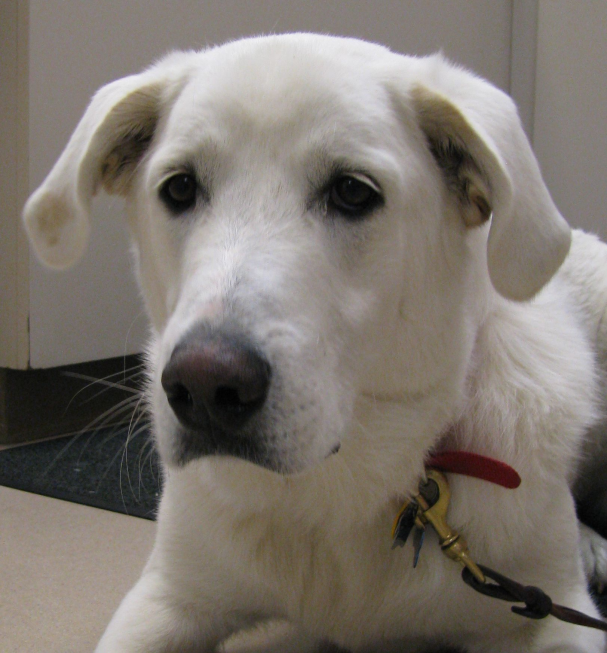
“Kirby” a young Great Pyrenees didn’t know just how lucky he was when he was adopted by our wonderful client, Jack.  Jack found this pup through the Great Pyrenees Rescue, and it was love at first sight.

Kirby had been seen for regular wellness visits like clockwork.  The day I first met this handsome boy, he was 2 years of age.  He had come in for a routine physical exam and basic blood work.  The bad news came the next day when the heartworm test was POSITIVE.  Another test confirmed the positive result.  Kirby’s disease could have gone undetected had Jack not fallen in love with this dog when he did.

Many folks will hear that we don’t have heartworm disease in Colorado. This couldn’t be further from the truth.  We don’t see as much as many other states, thankfully.  But, we see it.  In fact, Care Animal Hospital has seen 7 positive heartworm cases within the last 2 years!!! 

Disaster situations such as Hurricane Katrina and the tornado in Joplin, Missouri result in the displacement of family and shelter pets.  Shelters become overcrowded on a good day.  Disasters make the shelters even more congested.  Where do these dogs go?  Colorado is known to have some of the best pet owners in the country.  We are also known to have a high adoption rate of shelter animals.  It stands to reason that many of these animals come in to our shelter system.  They bring with them heartworm disease and other parasites in many cases.

WHAT IS HEARTWORM DISEASE?

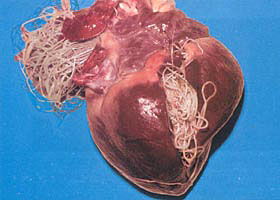
Heartworm disease is the infection of the parasite, Dirofilaria immitis.    When a mosquito bites an infected dog, it picks up the microfilarial (pre-larvae) stage of D.immitis from the dog’s bloodstream.  These microfilariae transition through three larval stages while inside the mosquito.  The third larval stage is the “infective” stage. 

Now the infected mosquito bites  another dog.  The third-stage larvae are deposited next to the site where the mosquito’s mouth parts puncture the dog’s skin.  Within 3-12 days, the larvae can be found within various tissues of the dog.  In this time, they also molt from third-stage to fourth-stage larvae.  They continue their travels in the dog’s tissues until days 50-70 when they take up residence in the vessels around the lungs.  By now, they have molted to the final stage and are full-fledged worms.  By day 70, these worms are nearly 1.5 inches long.


The worms migrate to the lungs.  They are forced into small arteries with increasing blood pressure.  The worms grow larger and eventually find their way into the right side of the dog’s heart.    Ultimately, this can lead to interference with heart valves and blood flow.


WHAT ARE THE SYMPTOMS OF HEARTWORM DISEASE?

The following summary is from the American Heartworm Society.


HOW IS HEARTWORM DISEASE TREATED?

Treatment is a sequence of events that is often spread out to deal with the organism’s ever-changing life stages occurring within the dog.  Several weeks to months of medication to kill the third- and fourth-stage larvae are often implemented to prevent these juvenile organisms from maturing to adult worms.    Chest radiographs are essential to try to classify the severity of disease (Class I, 2, 3, or 4) and to determine the extent of injury to the heart, lungs, and blood vessels.

The use of the antibiotic, Doxycycline, may be used to attempt to sterilize the female worms within the dog.  While this will not kill the worms, it may reduce their likelihood of reproducing. 


Lastly, the dog will receive a total of 3 staged injections over 2 months to kill adult worms.  This final drug is Immiticide, also known as Melarsomine.   Unfortunately, there is currently a large backorder of this medication in the United States making heartworm treatment much more challenging.

Immiticide is given with a long needle, deep in the muscles in the lower back.  The injection can be quite painful.  After the first injection and close observation for side effects, the dog will go home with strict instructions to be kept very quiet for another month.  The dog is generally kept in a crate or closed off area the entire time.  He does not receive any exercise.  He is on a leash to urinate and defecate, and then returned to his crate.  The dog often receives sedative to help quiet him down during this timeframe.

The goal is to not allow the dog to get excited which causes the heart rate to increase.  As the heart rate increases, so do the odds for a severe reaction as dead worm carcasses are carried in the blood stream and can block a pertinent vessel or heart valve.  This would result in an embolism which can immediately kill the dog.  Second, as the worms are dying, chemicals are released from their decomposing bodies that may result in a severe reaction, including anaphylaxis.  This, too, can be life-threatening.

After one month, the dog returns and receives 2 more injections given 24 hours apart.  The dog will go through at least another month of sedation and no activity.

The dog does not have another heartworm test for 7-9 months after the final treatment.   Some cases require a second treatment which is costly, dangerous, and hard for both the pet and owners.

Severe cases may require more aggressive means of removing the worms.  Manual worm extractions can be done in specialty practices with a device that travels directly to the dogs heart and removes worms through the jugular vein and right heart. 


HOW CAN I PREVENT HEARTWORM DISEASE?

You can reduce the likelihood of an infection by giving a recommended heartworm preventative on time each month for the life of the dog.  We recommend Merial’s Heartgard Plus™ .  This product is used in early diagnoses to kill off the young larvae before they can mature into worms.   Heartgard Plus™ also contains an added ingredient to protect against a variety of intestinal worms too.

Test your dog yearly.  The increasing number of positive cases we have seen warrants annual testing.  The most diligent owner cannot always know if their dog receives his medication then goes outside and vomits.  You would never know that this dose was missed.  Testing yearly is worth every penny and gives us all peace of mind.

The American Heartworm Society’s website is a wealth of information!


The bottom line…
Heartworm disease is deadly.

Heartworm disease treatment is painful.

Heartworm disease is expensive.

Treatment can be life-threatening.

HEARTWORM DISEASE IS PREVENTABLE!


What happened to Kirby, the Great Pyrenees?

 He just had his first follow-up blood test, and he was HEARTWORM NEGATIVE!!!!  This is Kirby with his owner, Jack!

Saturday, October 8, 2011

Broken lower canine tooth brings large problem to a small dog


Meet Spumoni, an eleven year old spayed female Shitzu owned by Zack and Kim D.  They adopted her as an adult so her prior life is a bit of a mystery.  She had a dental cleaning on August 9th and the technician performing the cleaning noticed a broken lower left canine tooth. 


As you can see on the x-ray, the top of the tooth has separated from the bottom of the tooth. You will also notice that there is very little bone below the root of the tooth.  Since the root of the tooth makes up so much of the jaw, there is a chance that when this tooth is removed, the jaw will break.  If the broken root is left, then there is a strong possibility that the broken tooth will transmit bacteria to the end of the root and infection will break the jaw.
The owners and Dr. Garnett talked about all options (including a root canal of that tooth) and it was decided to extract the tooth.  Luckily, as you will see, the tooth came out completely and the jaw remained intact. 


Spumoni trotted out of the hospital that night on antibiotics and pain relievers, joining her favorite people that cared so much about her that they helped her with this serious problem.